
CoServ’s Distribution Automation Team Deploys Smart Grid Tech to Improve Reliability for Members
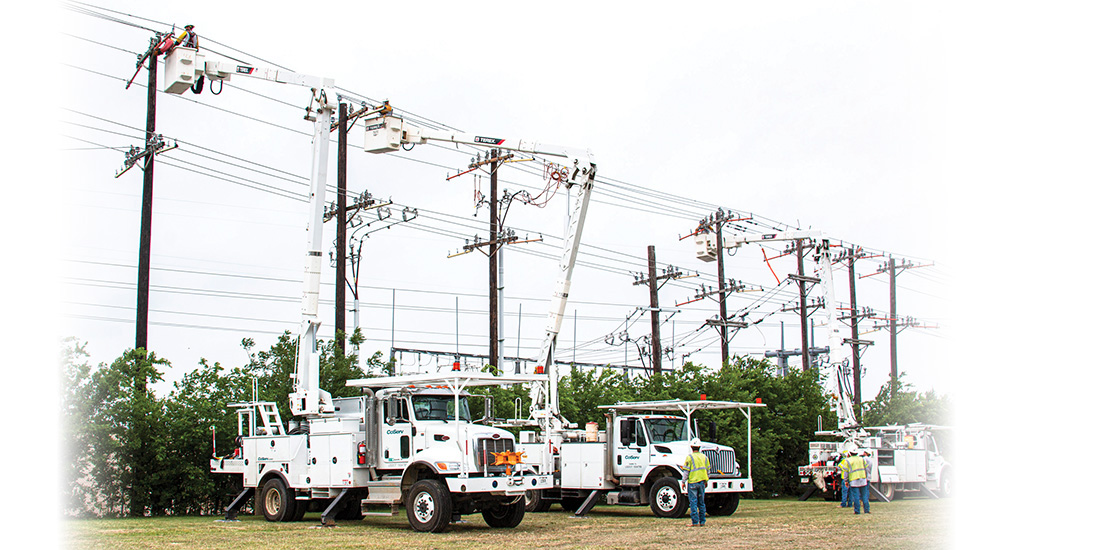
It's a dark and stormy night. Lightning just struck a pole near your home, blowing a fuse and causing a power outage. CoServ Dispatch is alerted to the outage and quickly notifies the nearest on-call linemen.
Because our linemen are highly trained and strategically located throughout the service area, they can respond to outage calls quickly. However, between the call coming in and the linemen arriving to the location and making the repair, restoration can still take two or more hours. But now, thanks to new smart grid technology, crews are able to restore power faster than ever, in some cases.
CoServ has made numerous investments and innovations on its SCADA (Supervisory Control and Data Acquisition) system in recent years, allowing system operators to narrow down the location of the fault that caused the outage to within one or two poles. Think of a SCADA system as the nervous system of the grid, with hundreds of smart devices communicating and sending data back to CoServ.
This increases reliability and results in fewer long outages for Members, as reflected in our SAIDI (System Average Interruption Duration Index) score. In 2024, CoServ had the best SAIDI score in its history at 22.6, meaning the average Member was without power for less than 23 minutes.
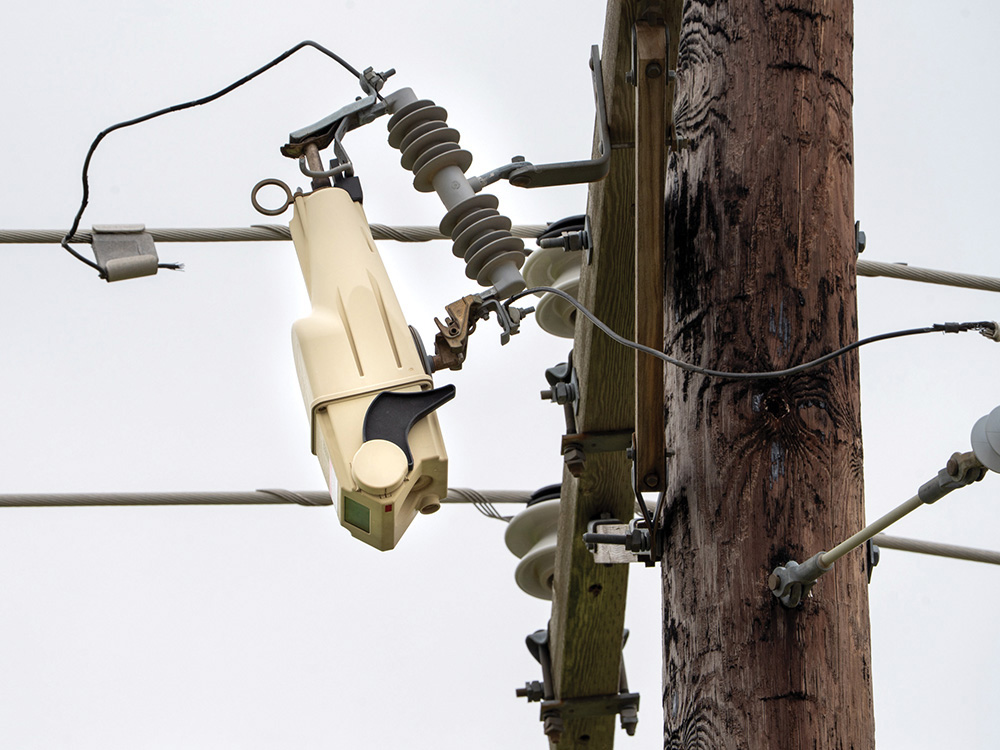
But there’s still room for improvement. CoServ’s Distribution Automation Team has started deploying new smart devices called TripSaver® II Reclosers that, in the previously mentioned scenario, would cause the lights to blink rather than causing an hour-long outage. As the name suggests, these devices are meant to save linemen a trip out in potentially severe weather to change a fuse.


1.) CoServ linemen add a new circuit and expand existing ones out of the Cross Timbers substation in Flower Mound. The project provides additional capacity for growth in the area and better reliability for existing Members. 2.) IntelliRupter® installation replacing 3 in 1 phase breakers in Aubrey. 3.) CoServ Distribution Automation Engineer Brendon Bailey runs a test on an IntelliRupter® PulseCloser® Fault Interrupter before it goes out into the field. Photos by BRIAN ELLEDGE
“It clears temporary faults, so it doesn’t disrupt Members with an extended outage. Seventy to eighty percent of the faults that cause outages are just temporary,” said Joshua Lewis, CoServ’s Director of Critical Infrastructure.
The long-term goal for the infrastructure improvements, which include the TripSaver® II Reclosers, smart switches also called IntelliRupters®, and other devices on our SCADA system, is not only to be able to send data back to CoServ’s System Operations quickly but also to make decisions faster without having to dispatch a crew, drastically reducing outage times.
The key is backfeeding (rerouting the power) and redundancy. Today, decisions about backfeeding are made by CoServ System Operators and linemen in the field. In the future, these smart devices would detect the fault, isolate the affected area, and backfeed on their own within seconds.
This “self-healing grid” is only possible because of the investments CoServ has made not only in technology but in upgrading the capacity of our power lines.
However, it is important to note that despite the aforementioned technological advancements to CoServ infrastructure, highly trained personnel will still be needed. If straight-line winds knock down a power line near your house, no amount of technology can fix that – linemen must respond to physically repair the downed lines and poles.
“As CoServ continues to innovate and invest in cutting-edge technology, our commitment is to keep enhancing reliability and safety,” Josh said.
“With these smart grid improvements, we are envisioning a future where CoServ Members enjoy even faster restoration times, even during the most challenging conditions.”