
Ride Along with the CoServ Gas Safety Team
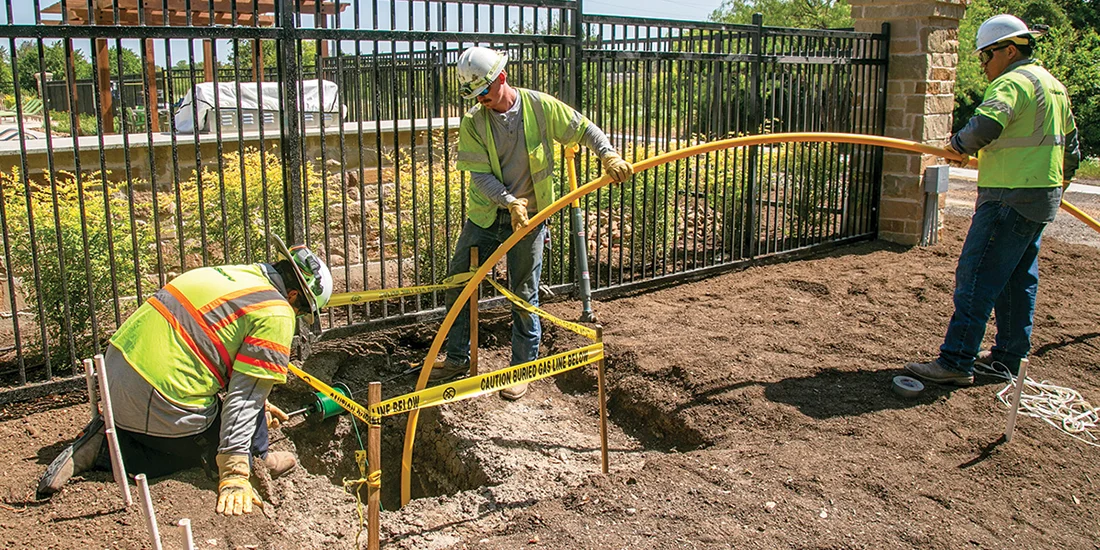
Safety is paramount for everyone who works on our natural gas system, from the engineers who design it, the construction crews who build it, and the technicians who maintain and repair it.
The CoServ Communications team rode along with Cameron Stephenson, Manager of Gas Field Safety Compliance, and his team to learn what our dedicated field personnel do to keep our system safe and reliable all year.
Protecting Critical Lines
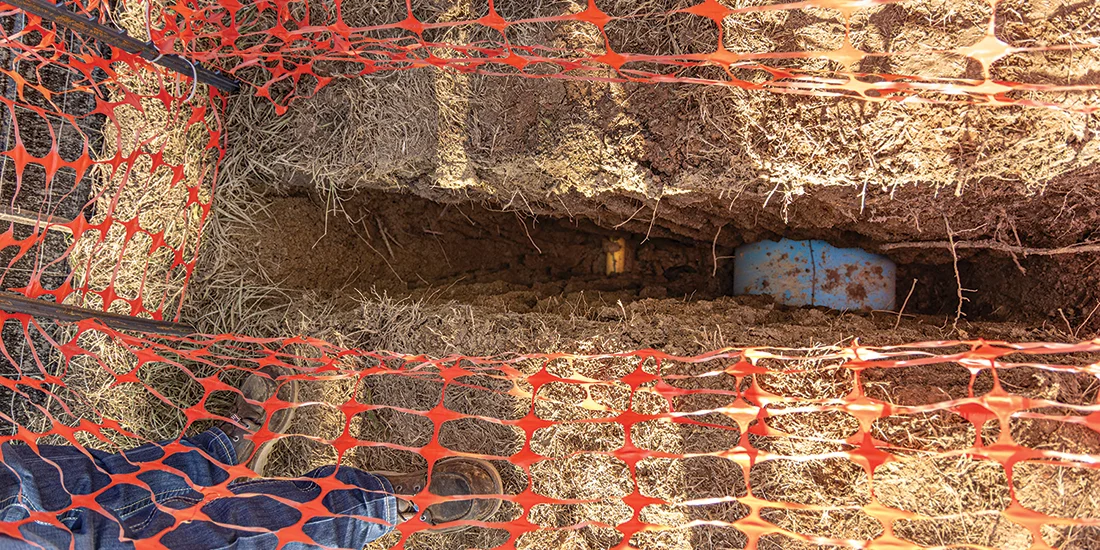
Our first stop was a “critical crossing” inspection in Argyle with Dustin Davis, a CoServ Gas Damage Prevention Specialist. A 12-inch sewer line was being installed under the road to serve the new church that’s under construction.
Before crews can start boring, they must call 811 to mark the existing utilities, as required by law. They identified several underground utilities, including a 2-inch main CoServ gas line that serves multiple Customers. There’s only one pipeline serving this area and the bore for the sewer line will pass about five feet under the gas line, making it a critical crossing.
Inspecting these critical crossings protects the public while also avoiding costly service interruptions and damages.
Excess Flow Valve
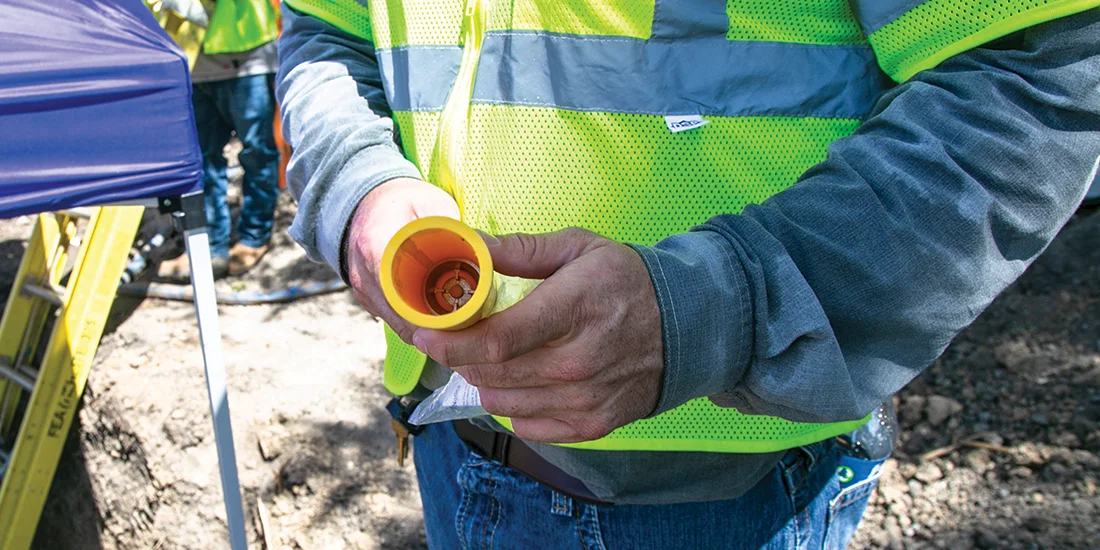
Next, we rode along with Doug Bowden, Gas Field Safety Compliance Specialist, to watch crews install a new gas service line, which will serve a grill at a neighborhood pool in Rowlett.
Before connecting the gas service line to the existing main line, CoServ crews install an excess flow valve (EFV). If the gas service line is ever hit and starts leaking, the excess flow will automatically trigger the EFV, preventing a release of natural gas.
These EFVs are installed on nearly every service line in our system, creating a safer situation for the public, first responders, and CoServ repair crews.
Mercaptan -- That "Rotten Egg" Smell
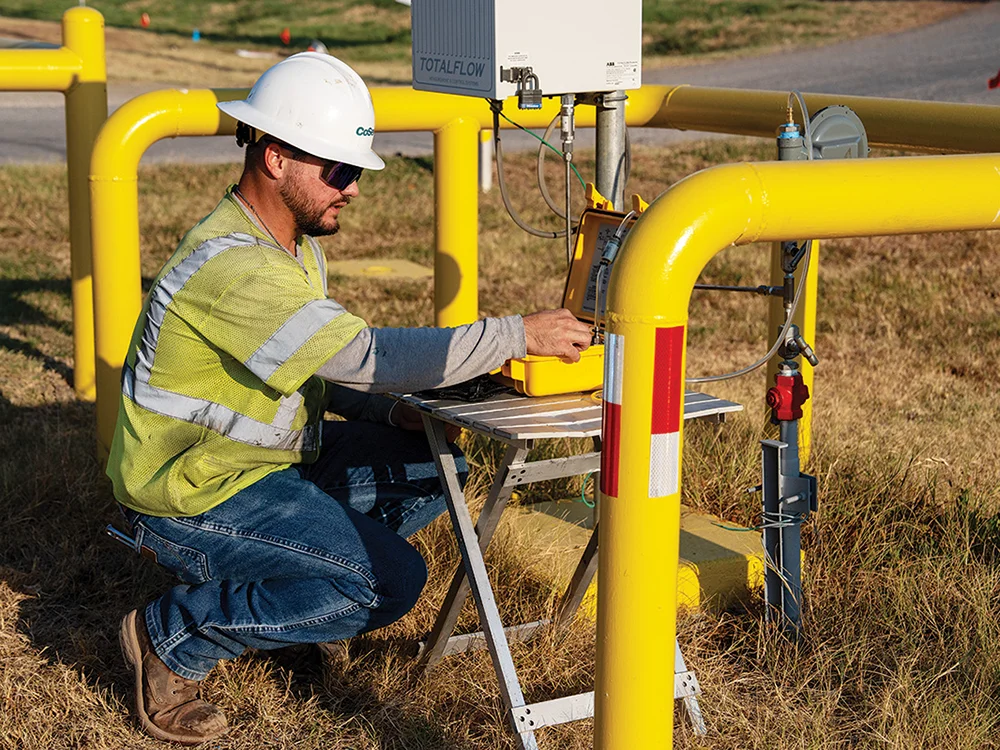
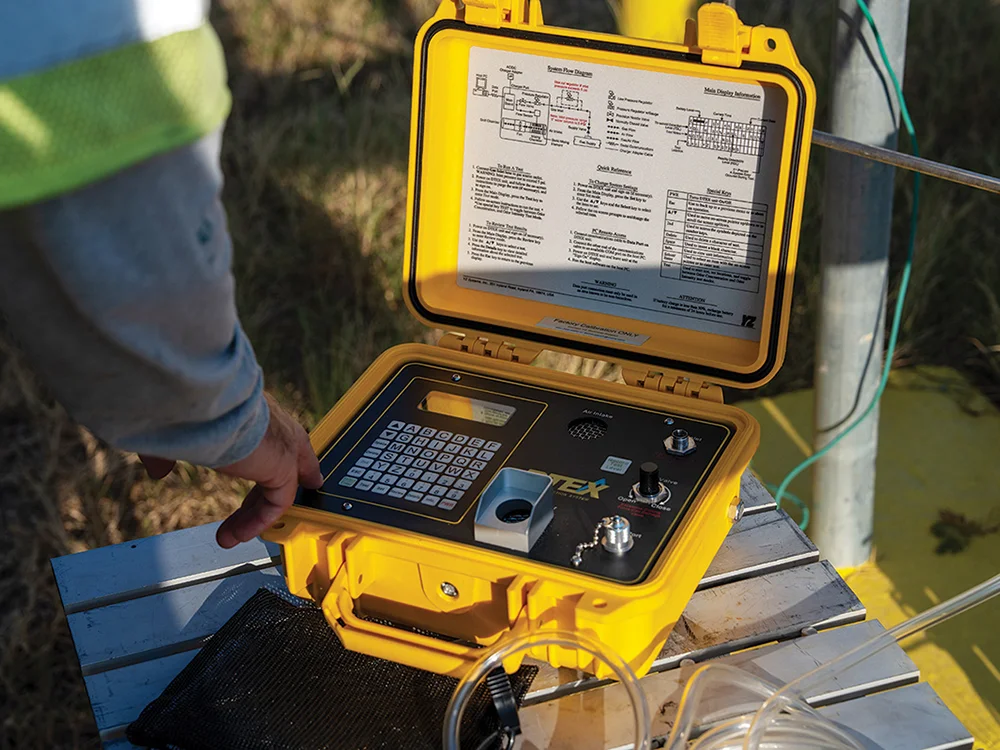
Gas Critical Infrastructure Supervisor Brock Squier uses an Odorant Detection system to check the amount of Mercaptan in CoServ Gas Lines. Photos by BRIAN ELLEDGE
Natural gas is odorless, meaning it would be impossible to detect without leak detecting equipment. For safety, an odorant called mercaptan is added to the natural gas supply, giving it that rotten egg smell.
Brock Squier, Gas Critical Infrastructure Supervisor, connects a mercaptan tester to the gas line at the end point in Argyle. He adjusts the device until he detects the smell of gas with his nose. CoServ Gas conducts these tests at every low point in our system twice a year.
This ensures that if there is a gas leak, people can smell it and report it.
Regulator Station Safety
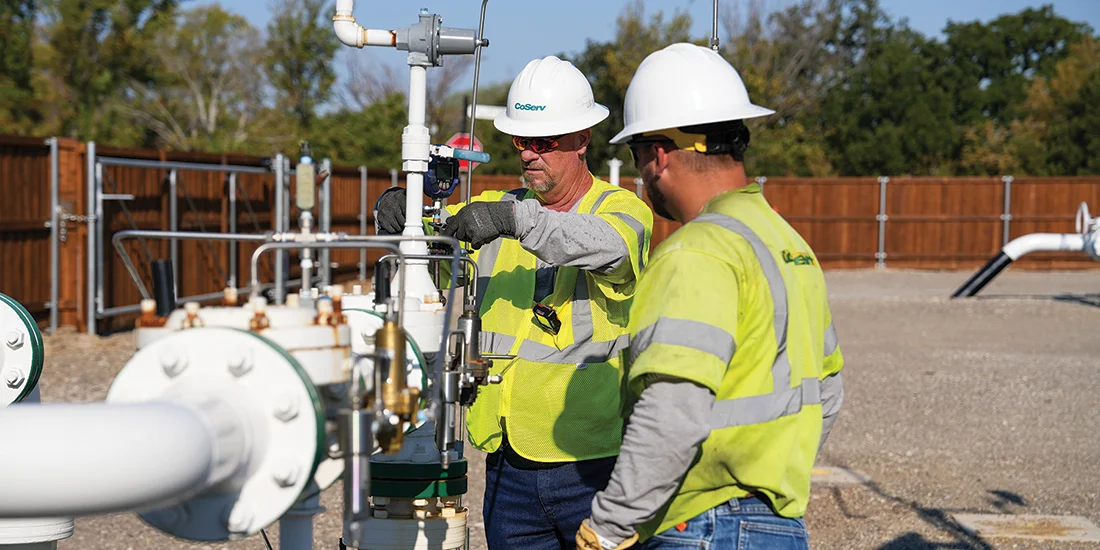
Our last stop was a regulator station in Argyle. Gas enters the site through a high-pressure transmission line at 450 psi. It then passes through several regulators that gradually reduce the pressure to 50 psi, the normal pressure for CoServ’s gas distribution lines.
Brock tests both regulators to make sure they hold the required pressure levels.
These regulator stations play an important role in safely reducing pressure on our system and they are tested twice a year.
Safety doesn’t happen by accident. It requires planning, specialized equipment, routine inspections, and dedicated Employees committed to doing things the right way. While much of this work takes place out of sight, it’s all part of CoServ’s ongoing mission to deliver safe and reliable natural gas service to the communities we serve.